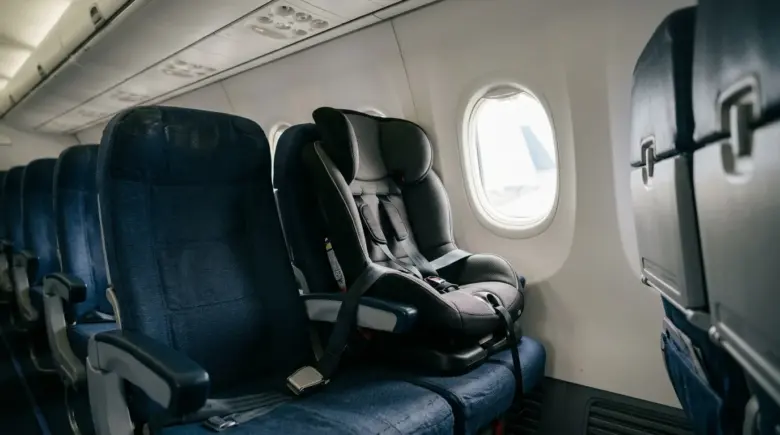
When you are traveling with a car seat on a plane, you have three real choices: install it on an airplane seat your child has a ticket for, check it at the gate, or check it with your bags. The first is the safest. The American Academy of Pediatrics calls an FAA-approved car seat or harness the safest option for a child in flight, and it names turbulence as the leading cause of children’s injuries on airplanes.
Before anything else, find the label. Your seat needs to say “This restraint is certified for use in motor vehicles and aircraft.” If that sentence is missing, the seat cannot be used on board, so settle this before you book.
Compare Your Options
Each choice trades some convenience for some protection. This table shows what changes.
| Option | Protection in flight | Seat at your destination | Main drawback |
|---|---|---|---|
| Install it on a ticketed airplane seat | Best | Yes, and it stays with you | You buy a seat and carry the car seat through the airport |
| FAA-approved harness on a ticketed seat | Good, for children who fit it | No, it works on aircraft only | You still need a car seat on the ground |
| Check it at the gate | None for the child | Yes | The seat leaves your sight, and a child under 2 may be on a lap |
| Check it with your bags | None for the child | Usually, unless the bag is delayed | The seat is handled the most |
| Rent or borrow one on arrival | None for the child | Depends on the provider | Unknown history, fit and expiration date |
Choose the airplane seat if your child is under 2, the flight is long, or you need the seat right after landing. Choose gate-check if your child has outgrown the seat’s use on aircraft or you only need it on the ground. Avoid arriving without a plan, because the ride from the airport is usually the first time your child needs a restraint.
Check Your Seat Before You Book
Most of the problems at the gate can be solved at home. Spend ten minutes on these checks while you still have time to change plans.
- Read the label. It is usually on the side or back of the shell. Take a photo of it in case a crew member asks.
- Confirm your child’s size. Rear-facing or forward-facing on the plane follows the same manufacturer limits you use in the car.
- Check the expiration date. Our car seat expiration checker shows where to look.
- Measure the seat’s width. Airplane seats vary, so compare the width with what your airline lists for that aircraft.
- Read your airline’s policy. The AAP notes that car seats generally do not count as luggage, but policies change.
What Is Not Allowed on Board
This is where parents tend to get caught out, because a seat that works well in the car may not be allowed on the plane.
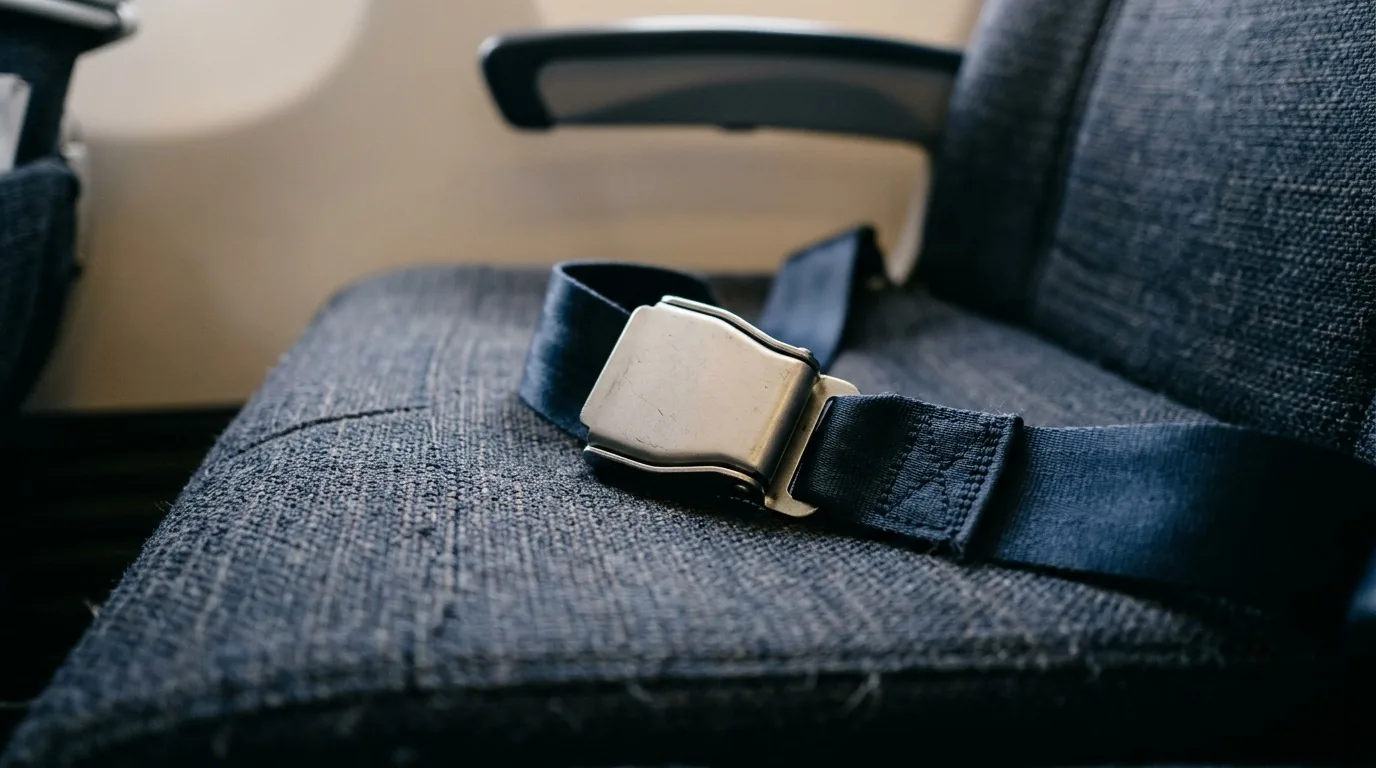
- Boosters. The FAA prohibits booster seats during taxi, takeoff and landing, because airplanes have lap belts only and boosters need a shoulder belt to work. Bring your booster for the car and let your child use the airplane seat belt.
- Harnesses and vests made for the car. Devices that tie a child to an adult or to the seat belt are prohibited unless the FAA has approved them.
- Exit rows. Children cannot sit in exit rows, with or without a car seat.
There is one aviation-only alternative. The CARES harness is FAA-certified for children up to 40 inches tall who weigh 22 to 44 pounds. The AAP points out that these harnesses are not for infants, and they cannot be used in a car.
Getting Through the Airport
At security
TSA requires car seats and boosters to go through the X-ray machine. If yours does not fit, officers inspect it by hand. Take your child out of the seat and carry them through the metal detector. Children 12 and under can leave their shoes and a light jacket on.
At the gate
Ask to board early. The AAP suggests this so you can install the seat without blocking the aisle. Tell the gate agent you are using a car seat on board, and have the label ready to show.
Installing the Seat on the Airplane
The method is close to a seat belt installation in your car, with a lap belt only.
- Choose a window seat. The AAP recommends one for a rear-facing seat so it does not block anyone’s exit.
- Thread the airplane belt through the correct belt path from your manual. Use the rear-facing path for a rear-facing child and the forward-facing path for a forward-facing child.
- Buckle the belt, then press the car seat down and pull the loose end tight. If the buckle sits in the wrong spot, ask a flight attendant for help.
- Buckle your child in, with the harness snug and the chest clip at armpit level.
- Keep your child buckled during taxi, takeoff, landing and any turbulence.
The steps are easier to do if you have practiced at home. Our guide on checking a car seat installation explains the harness and belt path checks you will use on the plane too.
If You Check the Seat
A checked seat is out of your control. The AAP says you may be able to check it at the gate, usually at no extra cost, but you should confirm that with your airline. Gate-checking keeps the seat in baggage handling for a shorter time than the ticket counter does.
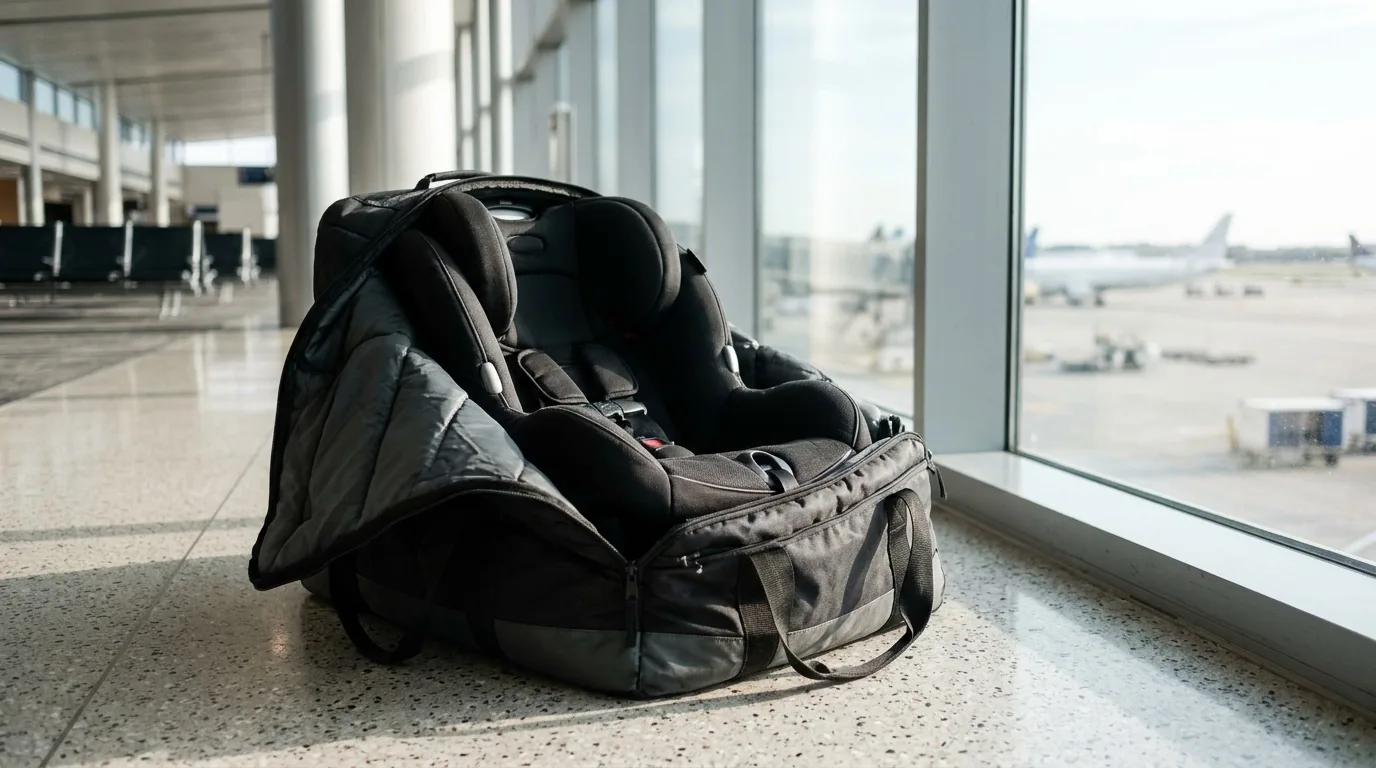
Use a padded bag if you have one, and take a photo of the seat before you hand it over. Inspect it when you get it back. If it looks damaged, read your manual and call the manufacturer before your child rides in it. Our guide to when a car seat needs replacing covers how to think about a seat with an unknown history.
Questions Before You Fly
Does a child under 2 need a ticket?
No. The FAA does not require one, and a child under 2 may fly on an adult’s lap. The FAA strongly discourages this and recommends an approved restraint in the child’s own seat for the whole flight. The AAP’s answer to whether lap sitting is safe is no.
Can an airline refuse my car seat?
If you bought your child a ticket and the seat is approved and labeled for aircraft, FAA guidance says the airline cannot stop your child from using it. Having a photo of the label helps if a question comes up.
Should my child be rear-facing on the plane?
Follow the seat’s manufacturer instructions. The AAP says a child who has outgrown the rear-facing limit should ride forward-facing on the aircraft seat.
Do I need a car seat in a taxi or rideshare?
Rules differ from state to state, and your child is just as exposed in a crash. See our guide to state child passenger laws and plan the ride before you land.
Next Stop: The Drive From the Airport
Once you land, the car seat goes back to its usual job, often in a rental car you have never used. Allow time to install it in the parking lot before you leave. If the trip includes more driving, our guide to keeping kids safe on long road trips covers breaks, rental vehicles and overnight stops.
Safety note: This article is general information and does not replace your car seat manual, your airline’s current policy, or advice from your pediatrician or a certified Child Passenger Safety Technician.

Fernandes Juliano Rodrigues is the editor of Kids Aren’t Cars and is responsible for its child passenger safety guides, which are based on current official guidance, manufacturer instructions and primary sources. Articles are not reviewed by a physician or certified Child Passenger Safety Technician unless a named reviewer appears on the article.