Last Updated: August 10, 2026
Reading Time: 7 minutes
Editor’s Note: Vehicle heatstroke is not limited to summer or especially hot climates. NHTSA reports that 31 children died of heatstroke in vehicles in 2025. These incidents can involve a child who was forgotten, intentionally left during a short stop, or trapped after entering an unlocked vehicle.
How Quickly a Parked Car Heats Up
Sunlight warms a vehicle’s dashboard, seats, steering wheel, and other interior surfaces. With limited ventilation, those surfaces heat the air inside the passenger compartment. There is no single temperature chart that accurately predicts every vehicle because conditions vary, but dangerous heating can happen quickly.
| Condition | What Safety Guidance Shows |
|---|---|
| First 10 minutes | A vehicle’s interior temperature can rise almost 20°F. |
| Outside temperature in the mid-60s | The interior can rise above 110°F. |
| Cracked windows | Opening a window slightly does not prevent dangerous heating. |
| Shade | Parking in shade may affect the rate of heating but does not make it safe to leave a child. |
A published observational study conducted on clear days with outside temperatures from 72°F to 96°F found an average interior increase of approximately 40°F over one hour. Most of the increase occurred during the first 30 minutes, and opening the windows 1.5 inches did not significantly reduce the heating rate or final temperature.
Never leave a child unattended in a vehicle, even with the windows open, the vehicle parked in shade, or the engine and air conditioning running.
Why Children Are Especially Vulnerable
A child’s body temperature can rise three to five times faster than an adult’s. Infants and young children also depend on adults to recognize the danger, remove them from the vehicle, and begin cooling.
NHTSA describes heatstroke as beginning when core body temperature reaches about 104°F (40°C) and the body’s temperature-control system is overwhelmed. A core temperature around 107°F (41.7°C) can be fatal.
Warning signs may include:
- Confusion, unusual behavior, or difficulty waking
- Weakness, dizziness, or fainting
- Hot or flushed skin
- Rapid breathing or a rapid pulse
- Nausea or vomiting
- Seizures or loss of consciousness
Do not wait for every symptom to appear. A child with heatstroke may be sweating or may have dry skin.
How Attentive Caregivers Can Forget a Child
A forgotten child is not always the result of intentional neglect. NHTSA and the American Academy of Pediatrics warn that this can happen to attentive caregivers, particularly when they are busy or distracted or when their transportation routine changes.
Common circumstances include:
- A change in routine: Someone who does not usually handle child-care drop-off takes the child that day.
- Distraction: Work demands, phone calls, appointments, or family emergencies interrupt the driver’s normal routine.
- An unfamiliar caregiver: A relative, babysitter, or other caregiver is not accustomed to transporting the child.
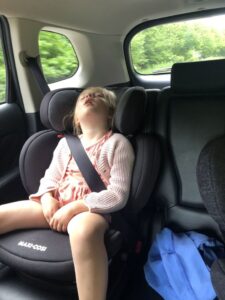
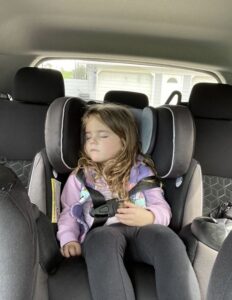
- A quiet or sleeping child: The caregiver receives no sound or movement cue from the back seat.
Because memory can fail, prevention should use repeatable habits and outside checks rather than relying on intention alone.
Prevention Strategies
Always Stop, Look, and Lock
Every time you park:
- Stop and deliberately check the entire passenger compartment.
- Look in every row, including directly at each child restraint.
- Remove every child before unloading groceries or handling other tasks.
- Lock the vehicle after confirming that everyone is out.
Create a Physical Reminder
- Place an item you will need at your destination, such as a purse, work bag, or briefcase, in the back seat.
- Keep a stuffed animal in the empty car seat. Move it to the front passenger area when the child is riding in the back.
- Place a written reminder where you will see it when parking.
If you place a phone in the back seat, put it somewhere secure and do not reach for or use it while driving.
Use Child-Care and Family Check-Ins
- Ask your child-care provider to contact you if your child does not arrive as expected.
- If someone else is transporting your child, confirm that the child arrived safely.
- Use a consistent check-in routine when caregivers share drop-off responsibilities.
- Explain the prevention routine to grandparents, babysitters, relatives, and anyone else who transports the child.
Keep Children From Entering Parked Vehicles
- Lock vehicle doors and trunks whenever the vehicle is not being used, including at home.
- Store keys and key fobs out of children’s sight and reach.
- Teach children that vehicles and trunks are not play areas.
- Keep rear fold-down seats closed when possible so children cannot crawl into the trunk from the passenger compartment.
- If a child is missing, promptly check nearby vehicles and trunks in addition to other high-risk locations.
Use Technology as a Backup
Some vehicles provide rear-seat or rear-occupant reminders. Features vary significantly. Many systems infer that someone may be in the back based on rear-door activity rather than directly detecting a child.
- Read the vehicle owner’s manual to understand what activates the reminder.
- Do not assume the system can detect a sleeping or motionless child.
- Do not disable an available reminder without understanding the consequences.
- Continue physically checking the back seat after every trip.
Use caution with aftermarket alarms and car-seat accessories. Do not replace an original chest clip, add a sensor pad under the car-seat cover, or modify the restraint unless the child-restraint manufacturer specifically permits that product and configuration. NHTSA has warned that some additions may affect a restraint’s operation or crash performance.
What to Do If You See a Child Alone in a Vehicle
Act immediately. Do not spend time estimating how long the vehicle has been parked or searching for receipts and other clues.
- Call 911. Give the location, vehicle description, license plate if visible, and the child’s apparent condition.
- Check whether the child is responsive. Look for movement, breathing, distress, confusion, or difficulty waking.
- Try the doors. The vehicle may be unlocked.
- Stay with the vehicle. If the child is responsive, have someone else ask the nearby business or facility to page the driver.
- Follow emergency-dispatch instructions. If the child is unresponsive or in obvious distress, NHTSA advises getting the child out as quickly as possible, even if emergency entry is necessary.
Laws governing emergency entry and civil-liability protection vary by state. Many states have Good Samaritan protections, but their conditions are not identical. Calling 911 promptly can document the emergency and provide situation-specific instructions. Legal uncertainty should not be used as a reason to ignore a child in imminent danger.
Emergency Cooling for Suspected Heatstroke
Heatstroke is a medical emergency. If a child has been removed from a hot vehicle:
Do This
- Call 911 immediately if that has not already been done.
- Move the child to shade or air conditioning.
- Remove excess clothing to expose more skin to cooling.
- Apply cool water. Spray, pour, or sponge cool water over the child’s skin. The American Academy of Pediatrics advises cool water rather than an ice bath for a child removed from a hot car.
- Use a fan if available to support evaporative cooling.
- Continue following the 911 dispatcher’s instructions until emergency personnel arrive.
Do Not Do This
- Do not delay cooling while waiting for the ambulance.
- Do not give fluids to a child who is confused, vomiting, having a seizure, very drowsy, or unresponsive. The child could inhale the fluid into the lungs.
- Do not use alcohol rubs.
- Do not assume apparent improvement means the emergency has passed. Continue with emergency evaluation and follow the instructions of medical personnel.
Understanding State Laws
State laws differ on leaving children unattended in vehicles, when a bystander may enter a vehicle, and what steps are required for civil-liability protection. Some laws may require calling 911 first, checking the doors, using no more force than necessary, or remaining at the scene.
Do not rely on claims that every state has the same rescue law. For legal guidance, check current state and local law. In an immediate emergency, call 911 and follow the dispatcher’s instructions.
The Bottom Line
Never leave a child alone in a vehicle for any length of time. Cracked windows, shade, tinted glass, a short errand, or a running air conditioner do not make the situation safe.
Build several safeguards into every trip: check every row before locking, create a physical reminder, arrange child-care arrival alerts, confirm handoffs between caregivers, and keep parked vehicles locked. Technology can provide another warning, but it cannot replace physically checking the vehicle.
For broader child passenger safety guidance, including safe arrival and departure routines, see our guide to School Drop-Off Safety Mistakes That Cause Most Parking Lot Accidents.
Frequently Asked Questions
Q: Is it safe to leave a child in a running vehicle with the air conditioning on?
A: No. NHTSA advises never leaving a child unattended in a vehicle, even if the engine is running and the air conditioning is on.
Q: Can heatstroke happen on a cool day?
A: Yes. NHTSA says an outside temperature in the mid-60s can allow a vehicle’s interior to rise above 110°F. The American Academy of Pediatrics reports that vehicle heatstroke has occurred when the outside temperature was as low as 57°F.
Q: Do cracked or tinted windows make it safe?
A: No. Cracking a window does not prevent dangerous heating, and no window treatment should be treated as permission to leave a child unattended. Parking in shade is not sufficient protection either.
Q: What if the stop will take only a minute or two?
A: Take the child with you. NHTSA advises never leaving a child in a vehicle unattended for any length of time, and vehicle interiors can begin heating rapidly.
Q: Can I rely exclusively on a rear-seat reminder?
A: No. Reminder systems differ in what they monitor and how they alert the driver. Some respond to rear-door activity without detecting whether a child is actually present. Read the vehicle owner’s manual and physically check every seating row after every trip.
Sources
- National Highway Traffic Safety Administration: Prevent Hot Car Deaths
- National Highway Traffic Safety Administration: Child Safety
- National Highway Traffic Safety Administration: Functional Assessment of Unattended Child Reminder Systems
- American Academy of Pediatrics, HealthyChildren.org: Prevent Child Deaths in Hot Cars
- Centers for Disease Control and Prevention: Infants and Children and Heat
- McLaren, Null and Quinn: Heat Stress From Enclosed Vehicles
Medical and Legal Disclaimer: This article provides general safety information and does not replace emergency services, medical care, legal advice, a child-restraint or vehicle owner’s manual, or guidance from a qualified Child Passenger Safety Technician. Call 911 for a child alone in a hot vehicle or any suspected heatstroke emergency. Consult your pediatrician about individual medical concerns and verify current state and local law.
Kids Aren’t Cars Editorial Team researches and maintains practical educational content about child passenger and vehicle safety. Our articles prioritize current official guidance, manufacturer instructions, primary sources, and clear corrections when information changes. Professional review is identified on an individual article only when a specific qualified reviewer has actually participated and can be identified.