Last Updated: August 10, 2026
Reading Time: 9 minutes
Editor’s Note: Babies commonly fall asleep during car rides. The important distinction is between sleep that happens while a child is correctly restrained during travel and using a car seat as a routine sleep space after the trip. For additional guidance, see our articles on car seat positioning and installation and safe, comfortable family road trips.
When a Car Seat Nap Becomes Unsafe
A properly installed car seat is the right place for a baby or child to ride, even if they fall asleep along the way. The risk changes when an infant car seat is removed from the vehicle and used as a crib, placed on an unstable surface, or left with the harness loose or partially fastened.
The American Academy of Pediatrics (AAP) does not recommend car seats, strollers, swings, infant carriers or similar sitting devices for routine infant sleep. If a baby falls asleep in one, the AAP recommends moving the baby to an appropriate firm, flat sleep surface as soon as it is safe and practical.
This guidance is especially important for young infants. Their heads are relatively heavy, their neck control is limited and slumping can place them in a position that interferes with breathing.
How Position Can Affect an Infant’s Breathing
In a sitting or semi-reclined device, an infant’s head may fall forward or sideways. The chin can move toward the chest, or the face may press against padding, straps or other material. These positions can narrow or obstruct airflow.
Car seat recline indicators and adjusters help place a rear-facing seat at the angle specified by its manufacturer. NHTSA notes that the correct recline is particularly important for young babies because it helps keep their heads from falling forward and restricting their airways.
There is no universal recline angle that caregivers should set by sight. Requirements vary by car seat model, the child’s size and sometimes the vehicle. Always use the car seat’s built-in indicator and follow both the car seat manual and vehicle owner’s manual.
What Research Has Found
A 2019 study in Pediatrics reviewed 11,779 sleep-related infant deaths reported from 2004 through 2014. Of those deaths, 348 occurred in sitting devices, and nearly two-thirds of the sitting-device deaths involved car seats. In fewer than 10% of the car seat cases was the seat being used as directed.
These figures do not show the probability that an individual car seat nap will cause harm. They do show that using sitting devices for sleep outside their intended traveling context can contribute to preventable deaths, particularly when combined with improper restraint, unsafe placement or inadequate supervision.
Correct Sleep During Travel
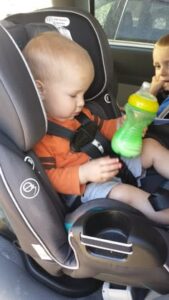
You do not need to keep a properly restrained child awake during a car ride. If your child falls asleep while traveling:
- Keep the child correctly restrained. Never loosen the harness to make sleep seem more comfortable.
- Use the correct recline setting. Follow the car seat’s indicator and instructions rather than estimating the angle.
- Keep harness straps flat and snug. For seats with a chest clip, position it at armpit level.
- Do not add unapproved padding. Avoid head straps, positioning pillows, neck supports, inserts or other accessories unless the car seat manufacturer specifically allows that exact product with that seat.
- Stop safely if something looks wrong. Do not reach into the back seat or turn around while driving.
If an infant’s head repeatedly falls forward despite correct installation and harnessing, stop using guesswork to solve the problem. Review the manual and contact the car seat manufacturer or a certified Child Passenger Safety Technician. Parents of premature or medically fragile infants should also discuss travel positioning with the child’s medical team.
What to Do When You Reach Your Destination
When the trip ends, move a sleeping infant from the car seat to a safe sleep space as soon as practical:
- Park in a safe location and turn off the vehicle.
- Unbuckle and lift the baby out of the car seat.
- Place the baby on their back in a crib, bassinet, portable crib or play yard intended for infant sleep.
- Use a firm, flat, non-inclined mattress with a fitted sheet.
- Keep pillows, loose blankets, toys, positioners and other soft objects out of the sleep area.
Babies should be placed on their backs for every sleep until age 1. If your baby has a medical condition that may affect sleep positioning, obtain individualized instructions from the baby’s treating clinician rather than improvising with household items or sleep-positioning products.
Unsafe Places to Put an Infant Car Seat
On a Bed, Sofa or Other Soft Surface
A soft surface can make a carrier unstable or allow it to tip. If the seat overturns, the infant may come into contact with soft bedding or cushions that can obstruct breathing.
On a Table, Counter or Other Elevated Surface
An infant’s movement, another child, a pet or an accidental bump can cause a carrier to fall. Never place a car seat on an elevated surface for sleep or storage while the child is in it.
On Top of a Shopping Cart
The AAP advises caregivers not to snap an infant car seat onto the built-in seat or top of a shopping cart. The added weight raises the cart’s center of gravity and can make the cart more likely to tip.
Use a stroller, baby carrier or shopping cart with a child seat located lower to the ground when possible. If you use a cart’s built-in child seat for an older baby or toddler, use its restraint and never leave the child unattended.
Attached to a Stroller as a Routine Nap Space
A compatible travel system can be convenient for transportation, but attaching a car seat to a stroller does not turn the car seat into an approved infant sleep surface. If the baby falls asleep, transfer them to a firm, flat sleep space as soon as practical.
A separate stroller bassinet should be used for sleep only if its labeling and manual specifically identify it as an infant sleep product and all instructions are followed.
Never Leave the Harness Loose or Partially Buckled
The AAP specifically advises against leaving infants in car seats or similar products with straps unbuckled or partially buckled. A baby can slide into the straps or become trapped in a position that interferes with breathing.
If you unbuckle a baby at a stop, remove the baby from the seat. Do not leave the child lying in the carrier with the harness loose.
Reflux Does Not Make Inclined Sleep Safer
Babies with gastroesophageal reflux should still be placed flat on their backs for sleep unless their treating physician provides instructions for an unusual medical situation. Back sleeping does not increase the risk of choking in healthy infants, including infants with reflux.
Do not use a wedge, sleep positioner, nest, pillow, rolled towel or inclined mattress to elevate an infant for reflux. Do not raise one end of the crib mattress. The FDA warns that infant sleep positioners, including products with wedges or bolsters, can cause suffocation and entrapment.
The AAP also notes that semi-inclined positioning does not improve infant reflux and may make it worse. If your baby has painful feeding, poor weight gain, blood in vomit, breathing symptoms or other concerning signs, contact your pediatrician rather than changing the baby’s sleep position.
Long Car Trips With a Baby
Car seats protect children during travel, but they should not become all-day sitting or sleeping spaces. For longer drives:
- Plan regular stops, generally about every two hours.
- At each stop, remove the baby from the car seat for feeding, diapering and a position change.
- Never breastfeed or hold an unrestrained baby while the vehicle is moving.
- If possible, have another responsible adult sit in the back to observe and care for the baby.
- Bring a portable crib or other appropriate sleep space for naps and overnight stops.
- Never use the car seat as the baby’s bed after arriving at a hotel, relative’s home or other destination.
For additional planning advice, see How to Keep Kids Safe and Comfortable During Long Road Trips.
Older Children Who Fall Asleep in the Car
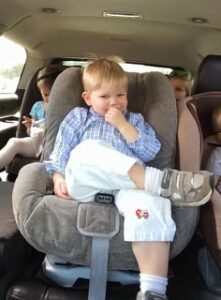
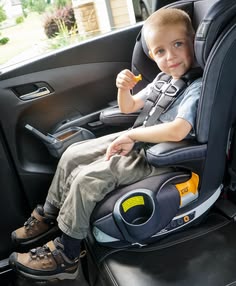
For toddlers, school-age children and preteens, the primary concern is maintaining correct restraint and seat belt positioning throughout the ride.
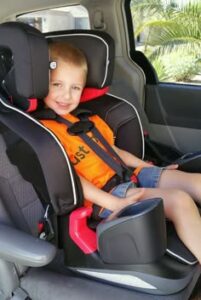
- Harnessed seats: Keep the harness snug and correctly positioned. Do not loosen it when the child falls asleep.
- Booster seats: The lap belt must remain low and snug across the upper thighs, while the shoulder belt stays across the shoulder and chest.
- Seat belts: Never allow a child to place the shoulder belt behind their back or under an arm.
- Sleeping position: Do not allow a child to lie across the vehicle seat, curl up outside the belt or share a belt with another passenger.
- Head restraints: Follow the booster seat and vehicle manuals. Do not attach aftermarket straps or bands around a sleeping child’s head.
If the seat belt repeatedly moves onto the child’s neck, face or abdomen while they sleep, safely stop and reposition the child. Confirm that the booster and vehicle head restraint are adjusted correctly and that the booster is appropriate for the child and vehicle.
A Sleeping Child Must Never Be Left Alone in a Vehicle
Never leave a child unattended in a parked vehicle, even for a minute, even with the windows open and even if the air conditioning is running. Vehicle temperatures can rise quickly, and mechanical failure or an accidental control change can create an emergency.
When you park, check the entire vehicle before locking it. Keep parked vehicles locked and store keys and fobs where children cannot reach them. For more prevention strategies, see How to Protect Children From Heatstroke Inside Parked Cars.
Never run a car inside an attached garage, even with the garage door open. Carbon monoxide is colorless and odorless and can cause sudden illness or death. A vehicle in a detached garage should not be started until the garage door is fully open and fresh air can circulate.
When to Call 911
Call 911 immediately if a child:
- Stops breathing, is only gasping or becomes unresponsive
- Has severe difficulty breathing
- Has lips, skin or a face that appears blue, gray or purple
- Becomes unusually limp or cannot be awakened normally
Remove the child from the car seat if you can do so safely. If the child is not breathing, begin age-appropriate CPR if you are trained and follow the emergency dispatcher’s instructions.
Quick Guide: What Should You Do?
| Situation | Safer Response |
|---|---|
| Baby falls asleep during a drive | Continue the trip with the seat correctly installed and the harness snug. |
| You reach your destination | Move the baby to a firm, flat sleep surface as soon as practical. |
| Baby’s head falls forward | Pull over safely, check the recline and harness, and consult the manual. Do not add unapproved accessories. |
| You unbuckle the baby during a stop | Remove the baby from the seat rather than leaving the harness loose or partially buckled. |
| Baby has reflux | Use back sleeping on a firm, flat surface. Do not use wedges, positioners or an inclined mattress. |
| You need to shop with an infant | Use a stroller or baby carrier instead of placing the car seat on top of a shopping cart. |
| An older child moves the shoulder belt while asleep | Stop safely and restore correct belt position. Never allow the belt behind the back or under an arm. |
| A child is sleeping when you park | Take the child with you. Never leave any child alone in the vehicle. |
Frequently Asked Questions
Can I let my baby finish a nap in the car seat if I watch continuously?
A car seat is not recommended for routine sleep outside the traveling context. Direct observation does not turn it into a firm, flat sleep surface. Move the baby to an appropriate crib, bassinet, portable crib or play yard as soon as practical.
Should I wake my baby if they fall asleep while I am driving?
No. Continue driving safely if the seat is correctly installed and the baby remains properly harnessed. Do not attempt to adjust or remove the baby while the vehicle is moving. Transfer the baby after you reach a safe destination.
Is a car seat safe for sleep when attached to its stroller frame?
The attachment may be approved for transportation, but the car seat is still a sitting device rather than a routine infant sleep surface. Transfer a sleeping infant to a firm, flat sleep space as soon as practical.
Can I use a wedge for my baby’s reflux if my pediatrician says the baby needs to be elevated?
Do not buy or improvise a wedge, sleep positioner or inclined surface for home sleep. Ask the pediatrician to clarify how the recommendation can be followed consistently with current safe-sleep guidance. Medical positioning used in a continuously monitored hospital setting is not the same as routine sleep at home.
What about premature or medically fragile babies?
Some babies need hospital screening to confirm they can travel safely in a semi-reclined car seat. A medical team may recommend an FMVSS 213-compliant car bed for certain children who need to travel lying down. A car bed is a specialized vehicle restraint, not a substitute for a crib or other safe sleep surface at home.
Where can I get help checking the installation and recline?
NHTSA provides a locator for car seat inspection stations. Certified technicians can check the seat and teach caregivers how to install and use it correctly. NHTSA says these inspections are free in most cases, and some locations offer virtual appointments.
The Bottom Line
A child falling asleep during a car ride is not, by itself, a reason to panic. The child should remain in the correct restraint, installed and used exactly as directed.
The preventable danger comes from turning the car seat into a routine crib, leaving an infant with loose straps, placing the carrier on an unstable surface, adding unapproved positioning products or leaving a sleeping child alone in a vehicle.
When the trip is over, transfer an infant to a firm, flat, non-inclined sleep surface. For reflux, congestion or other medical concerns, do not use wedges or sleep positioners. Follow current safe-sleep guidance and consult your child’s pediatrician for individualized care.
Sources
- American Academy of Pediatrics: Sleep-Related Infant Deaths—Updated Recommendations for Reducing Infant Deaths in the Sleep Environment
- HealthyChildren.org: What Is the Safest Sleep Solution for a Baby With Reflux?
- FDA: Recommendations for Parents and Caregivers About the Use of Baby Products
- Pediatrics: Infant Deaths in Sitting Devices
- NHTSA: Car Seat and Booster Seat Safety
- HealthyChildren.org: Is It Safe for a Baby to Travel in a Car Seat for Hours?
- HealthyChildren.org: Shopping Cart Safety for Children
- NHTSA: Child Heatstroke Prevention
- CDC: Carbon Monoxide Poisoning Basics
Medical and Safety Disclaimer: This article provides general educational information and does not replace your child’s pediatrician, a certified Child Passenger Safety Technician, the car seat and vehicle manuals, emergency services or applicable state and local law. Call 911 for breathing difficulty, unresponsiveness or another suspected emergency.
Kids Aren’t Cars Editorial Team researches and maintains practical educational content about child passenger and vehicle safety. Our articles prioritize current official guidance, manufacturer instructions, primary sources, and clear corrections when information changes. Professional review is identified on an individual article only when a specific qualified reviewer has actually participated and can be identified.